Test And Tag Requirements In NSW: What Northern Rivers Businesses Need To Know

Rob Ward Electrical Services • September 4, 2026

Test and tag requirements in NSW come down to one core duty: businesses must ensure electrical equipment is safe to use, and testing intervals depend on how hard that equipment is used. A construction site might need testing every three months, while a quiet office could be compliant on a five-year cycle. Getting that interval wrong, whether by testing too rarely or paying for testing you don't need, is one of the most common compliance traps small businesses fall into.


For cafes, retail stores, offices and holiday letting properties across the Northern Rivers, the confusion usually isn't about whether test and tag matters. It's about which interval applies, who's actually allowed to carry it out, and what those coloured tags on the power cords actually mean.

What Are the Test and Tag Requirements in NSW?

Under the Work Health and Safety Regulation, a person conducting a business or undertaking (PCBU) must ensure electrical equipment is regularly inspected and tested where it's exposed to conditions likely to cause damage, such as moisture, heat, dust, vibration or rough handling. The regulation doesn't name "test and tag" specifically, but it's the industry-accepted way to demonstrate that duty has been met.


Two standards do the heavy lifting here. AS/NZS 3760 covers in-service testing for general workplaces: offices, shops, cafes, warehouses. AS/NZS 3012 applies specifically to construction and demolition sites, where equipment takes a much harder beating. Which one applies to your premises determines both your testing interval and how your tags get colour-coded.

What Are the Required Test and Tag Intervals in NSW?

There's no single blanket interval that applies to every business. Instead, AS/NZS 3760 sets intervals based on risk environment:


  • Construction, demolition and mining sites: every 3 months (under AS/NZS 3012)
  • Factories, workshops and other hostile environments: every 6 to 12 months
  • Offices, retail and other low-risk environments: every 12 months, extending up to 5 years where equipment is rarely moved or damaged
  • Equipment that's never plugged in outside a stable environment (server rooms, for example): can often run on the longest cycle, largely via visual inspection


A Northern Rivers holiday letting property with a kitchen and outdoor entertaining area sits in a different risk category to a straightforward admin office, even if both are technically "low risk" compared to a building site. A competent tester will assess the actual conditions equipment is exposed to, not just guess based on business type.


What Are the Six Monthly Test and Tag Colours?

This is where a lot of business owners get tripped up, because the colour system means different things depending on the site. On construction and demolition sites, AS/NZS 3012 mandates a quarterly rotation of four colours, commonly red, green, blue and yellow, cycling every three months so a site supervisor can spot an overdue tool at a glance without checking paperwork.


For general workplaces under AS/NZS 3760, there's no legally mandated colour for a six-monthly interval. Testers typically apply a consistent colour system anyway, for example alternating orange and white for six-month cycles, or a separate colour for annual and five-year intervals, because it lets anyone in the workplace see compliance status visually, even without pulling up the test records. The exact colours can vary between testing providers, but the principle is the same. Colour tells you the cycle, and the printed date tells you the deadline.

Can Any Electrician Do a Test and Tag?

You don't actually need a licensed electrician to test and tag equipment in NSW. What you need is a "competent person": someone who has the knowledge and skills to inspect and test electrical equipment correctly, gained through training, qualification or experience. In practice, that usually means someone who has completed a recognised test and tag course.


Licensed electricians can absolutely test and tag, and many businesses prefer bundling it with other electrical work. But test and tag competency doesn't extend the other way. A trained tester who isn't a licensed electrician can inspect and tag plug-in equipment, but can't carry out electrical installation, repair or switchboard work. If a tag-out during testing reveals a faulty appliance or a dodgy lead, that repair needs to go to a licensed electrician.

What Is a Test and Tag Certificate and Why Does It Matter?

A test and tag certificate (or compliance report) is the paperwork trail behind every tag: a record of what was tested, when, the result, and who carried it out. If WorkCover or an insurer ever asks how you're meeting your electrical safety duty, this is what you produce. The tag on the cord is the quick visual check. The certificate is the evidence that backs it up if anyone asks.


Keep certificates on file for at least as long as the testing interval they cover, and ideally longer. Insurers reviewing a claim after an electrical incident will want to see a documented history, not just the most recent tag.

Common Test and Tag Compliance Traps for Northern Rivers Businesses

The most expensive mistake isn't skipping test and tag altogether. It's applying the wrong interval. A cafe owner who assumes their kitchen equipment falls under the standard 12-month office cycle, when in reality the moisture and heat exposure pushes it into a shorter interval, can end up with equipment that's technically overdue well before anyone notices a problem.


As an example: a Ballina retail tenant recently had their point-of-sale equipment and back-of-house appliances tested on the same annual cycle as their front-counter gear, without accounting for the extension leads and portable heaters used in a stockroom with poor ventilation. A proper risk assessment split that equipment onto a shorter interval, a small change that closed a real compliance gap.


It's also common for a test and tag audit to flag other issues at the same time. Ageing extension leads are one thing, but an overloaded or outdated switchboard is a bigger risk hiding behind the same wall socket. If that turns up, a switchboard compliance check can be arranged during the same visit rather than requiring a separate callout.

How to Stay Compliant Under AS/NZS 3760

Test and tag is one piece of a wider electrical maintenance routine, not a standalone box to tick once a year. Our earlier piece, Industrial Electrical Maintenance For Maximum Reliability, covers how testing schedules fit alongside broader maintenance planning. Worth a read if you're setting up a compliance calendar for the first time.


If a test and tag audit turns up bigger issues than a few worn cords, having an electrician who can act on the spot saves a second visit. Our commercial electrician Ballina team handles the follow-up repairs that fall outside standard test and tag competency, from lead replacement through to switchboard and installation work.

Frequently Asked Questions

What are the required test and tag intervals in NSW?

Intervals depend on risk environment: three months for construction and demolition sites under AS/NZS 3012, six to twelve months for factories and hostile environments, and up to twelve months (extending to five years for low-risk equipment) for offices and retail under AS/NZS 3760.

Can any electrician do a test and tag?

Yes, a licensed electrician can test and tag, but it isn't a requirement. A trained "competent person" who has completed a recognised test and tag course can legally carry out the work on plug-in equipment, though repairs and installation work still require a licensed electrician.

What are the six monthly test and tag colours?

There's no single mandated colour for six-month intervals outside construction sites. Testers commonly apply a consistent colour system, such as alternating between two colours each half-year, so compliance status is visible at a glance. The exact colours can vary by provider.

Do I need a test and tag certificate as well as the tags?

Yes. The tag is the quick visual indicator on the equipment itself. The certificate is the documented record you'd need to produce for WorkCover, an insurer, or an audit. Keep certificates on file beyond the current testing cycle.

Is test and tag a legal requirement for every NSW business?

Not as a single blanket rule. The legal duty is to ensure electrical equipment is safe, and test and tag is the accepted method for demonstrating that. Whether testing is required, and how often, depends on the equipment's operating environment.

What happens if equipment fails a test?

It gets tagged out of service immediately and removed from use. A competent tester can identify and tag a faulty item, but any repair, whether that's replacing a plug, fixing a lead, or deeper electrical work, needs to be carried out by a licensed electrician.

The Bottom Line

Meeting test and tag requirements in NSW isn't about ticking a single annual box and forgetting about it. It's about matching the right interval to how your equipment is actually used, and knowing that a trained competent person, not necessarily an electrician, can carry it out. Not sure how often your business needs testing? Get in touch and we'll work out a schedule that fits your premises.

Electrician Fixing Post in Tweed Heads
By Rob Ward Electrical Services July 22, 2026
Electrical condition can affect property inspections. Learn why hiring an electrician in Tweed Heads matters. Contact us today.
An Electrician In Lismore Installing Electrical Wiring
By Rob Ward Electrical Services July 9, 2026
Three-phase vs single-phase power: discover what rural properties actually need and when to call an electrician in Lismore. Read our blog today!
Utility Truck Repairing Power Lines During Northern Rivers Outage Preparation
By Rob Ward Electrical Services May 14, 2026
Stay prepared for outages with a trusted electrician across the Northern Rivers — including Lismore, Tweed Heads, Ballina and Byron Bay. Call us.
Electrical Maintenance Crew Servicing Power Lines With Boom Lifts
By Rob Ward Electrical Services May 7, 2026
Keep operations running smoothly with a trusted electrician in Tweed Heads. Contact us today for dependable industrial electrical maintenance.
Modern Ceiling with Multiple Lights
By Rob Ward Electrical Services April 2, 2026
Fix flickering lights before they become a hazard. Discover causes and solutions from an electrician in Northern Rivers. Book an inspection today.
Electrician working on fuse box
April 2, 2026
Learn what causes circuit breakers to trip. Discover common electrical issues, safety risks and when to call electricians in Byron Bay for reliable help.
Three Utility Workers in Hard Hats and Safety Gear Work — Rob Ward Electrical Services in West Ballina, NSW
March 16, 2026
Learn common electrical safety risks in older properties and how an electrician in Tweed Heads can help protect your home. Read the guide today.
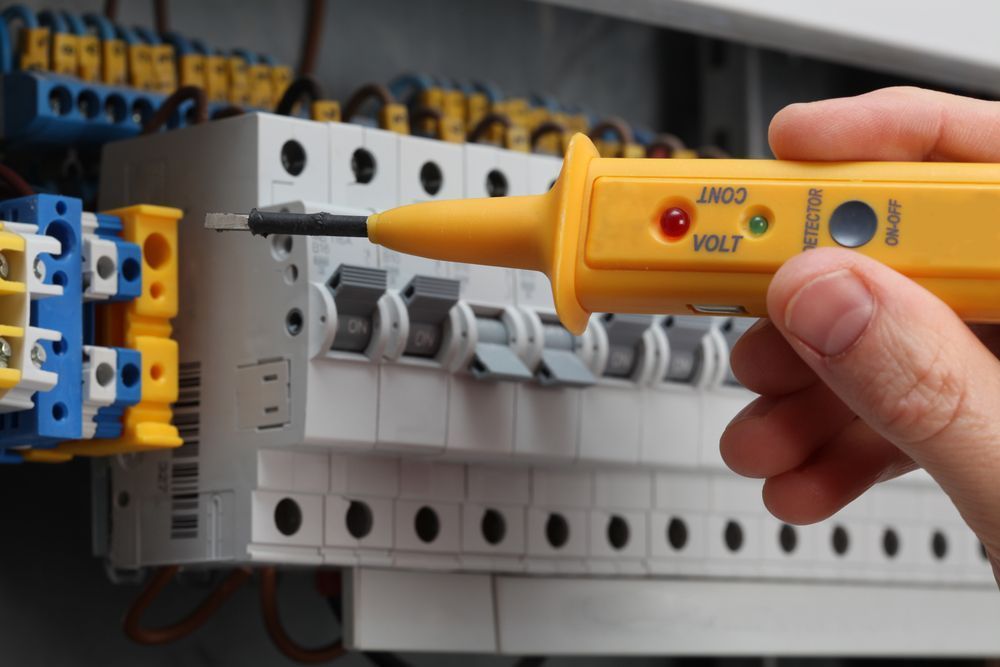
A Hand Uses a Yellow Voltage Tester to Check a Circuit Breaker — Rob Ward Electrical Services in West Ballina, NSW
March 9, 2026
Why fuses blow and what to do next. Get safe solutions from experienced electricians in Lismore. Read the guide and restore power safely today.
A Technician Wearing a Blue Uniform Uses a Yellow Digital Multimeter — Rob Ward Electrical Services in West Ballina, NSW
February 23, 2026
Learn how to choose a professional electrician in Tweed Heads, with tips on licensing, insurance and why you should hire electrician services locally.
A Person Uses a Digital Multimeter to Test Electrical Wiring — Rob Ward Electrical Services in West Ballina, NSW
January 5, 2026
Learn what happens in an electrical safety inspection and how to prepare. Get expert guidance from electricians in Lismore. Read more today.
Show More